Personalities and Management Styles
Adapted from lecture materials by David Root [1].
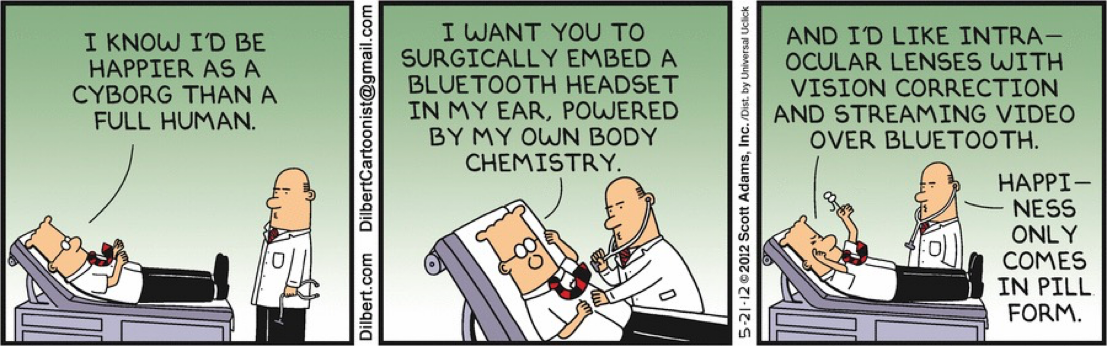
Managing technical people is usually taught through an archetype — the analytical, autonomy-seeking, authority-sceptical “geek” of early-2000s management writing, along with the familiar stereotypes about bluntness, hobbies and hygiene. Treat that archetype as history rather than description: Cruz and colleagues [2] reviewed forty years of personality research in software engineering and found no consistent profile. Technical people are also not only programmers: the same questions arise in medicine, research and data analysis.
The six pages below give the frameworks a manager will actually meet; each ends with a How solid is this? section saying how far it has been tested.
- Paul Glen’s “Leading Geeks” framework — the archetype this area is built on, what motivates technical staff, and what AI-assisted work does to the argument.
- MBTI — type distributions for software engineers, and why they do not support building a team from four-letter codes.
- Leadership styles — Goleman’s six styles and where their evidence comes from.
- Leading in practice — choosing and combining those styles, with five worked cases from incident response to scaling an organisation.
- Communication — constructive versus destructive delivery, listening as a technique, and which meetings need a room.
- National culture — Hofstede’s dimensions, what they are good for, and the two criticisms that carry numbers.
Acknowledgments
This content is heavily inspired by and adapted from lectures by Eduardo Miranda and David Root [1] on software project management. The structure, examples, and pedagogical approach reflect their teaching materials and frameworks.
References
- D. Root,Managing Software Development. Carnegie Mellon University / Innopolis University lecture series, 2014.
- S. Cruz, F. Q. B. da Silva, and L. F. Capretz,“Forty Years of Research on Personality in Software Engineering: A Mapping Study,” Computers in Human Behavior, vol. 46, pp. 94–113, 2015, doi: 10.1016/j.chb.2014.12.008.
Disclaimer: AI is used for text summarization, polishing and explaining. Authors have verified all facts and claims. In case of an error, feel free to file an issue.