Paul Glen: “Leading Geeks”
Leading Geeks [1] is a practitioner framework built on one claim: technical people deliver their value through thought rather than behaviour, so managing them by controlling behaviour destroys the thing being paid for.
1. The archetype
Because the work is cognitive and invisible, a manager cannot inspect it in progress: activity targets, presence and process compliance all measure the wrong thing. Glen’s portrait of the people doing it is drawn to match:
- They trust technical reasoning over positional authority, grant leadership to whoever demonstrates competence rather than to whoever holds the title, and ignore rules and dress codes they have no reason to respect.
- They work in flow (Csikszentmihalyi) and treat interruption as loss — a day broken by meetings is not half a day of output — and dislike open-ended tasks and ambiguous goals.
- They are driven by the problem as much as the solution, and disengage from work requiring no thought.
- They read self-expression as communication, which makes them blunt, slow to notice they have been misunderstood, and prone to blurring facts, inferences and assumptions — especially outside the business domain.
- They want autonomy and peer recognition, compete in ways that cut against teamwork, and attach loyalty to the craft or the immediate manager rather than the company.
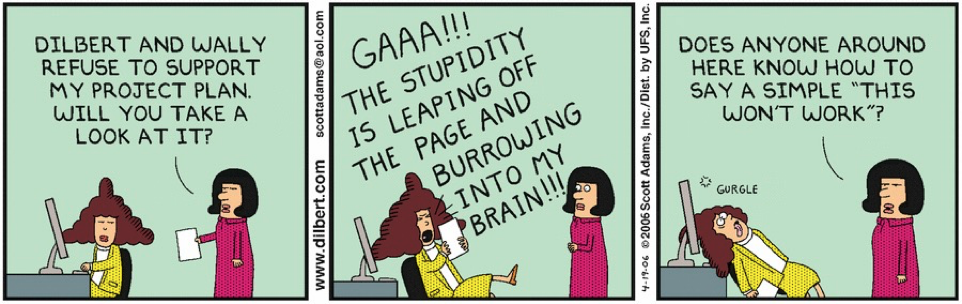
2. Motivators and de-motivators
Glen’s practical core is a matched pair of lists. What motivates: inclusion in the decisions that shape the work, a visible big picture, responsibility matched by real control, work that uses the skills someone has, consistent rewards, room to grow, an environment worth being in. What de-motivates is the mirror image — exclusion, hidden context, favouritism, responsibility without authority, micromanagement, attention to how rather than results, evaluation against criteria nobody stated, blame for outcomes outside one’s control, and extrinsic rewards aimed at the wrong thing.
Example: a reward that de-motivates. A team ships a release two weeks early because one engineer spent a fortnight rewriting a flaky test harness. Management then hands gift cards to everyone who logged overtime that month; the test-harness engineer kept normal hours and gets nothing. The reward has named attendance as the valued behaviour, and the next flaky harness stays flaky.
3. What Glen tells managers to do
Mentor rather than boss; manage by goals rather than quotas; let the domain expert lead inside the domain; be honest rather than superficially positive; encourage interdependence where the work needs it. Defend the working environment, including the unglamorous parts — HR paperwork, parking and broken tooling demoralise teams out of proportion to the time they cost. Build the culture deliberately: fairness, open feedback, learning from mistakes, information accessible rather than siloed, and trust maintained through transparency so that ambiguity is survivable. When conflict appears, go after root causes rather than symptoms, and know when to step in and when to let the team solve it.
4. Does this still hold?
Glen’s central claim turns out to be the sharpest available lens on AI-assisted development:
- Working through a code-generating model does not remove programming expertise — it redistributes it toward context management, evaluating generated code, and judging when to take manual control [2].
- Experienced developers describe the model as a junior colleague, less experienced ones as a teacher [3]. Awareness of the tools is essentially unrelated to experience, so senior reluctance is a considered position rather than an information gap, and “more training” is the wrong response to it.
- The verification work lands on core developers, who in one large study reviewed 6.5% more code while their own output fell 19% [4].
Read with Glen: work that removes the thinking and adds verification burden is a de-motivator by his own account — and it falls hardest on the people the team can least afford to lose.
How solid is this?
- Where it comes from. Glen rests the account on “more than fifteen years working with, leading, managing, coaching, and cajoling geeks in academic and business environments” — experience presented as argument, with no study behind it. Useful vocabulary, not evidence, and a 2003 characterisation of a workforce that has changed considerably since.
- What is contested. Cruz and colleagues [5] found no consistent personality profile across forty years of software-engineering studies, so §1 is a vocabulary, not a description of the population.
- Heuristics, not measurements. Glen’s “80/20” framing of conflict causes is a rule of thumb; no measured distribution of team conflict is being claimed.
- Where the evidence actually is. For what motivates software engineers, see Beecham and colleagues’ systematic review [6]. Herzberg’s original motivator–hygiene work [7] — 12 investigations, 1,685 employees — was carried out on engineers and accountants, which makes it unusually well matched to this audience.
Acknowledgments
This page adapts material from lectures by Eduardo Miranda and David Root [8] on software project management.
References
- P. Glen,Leading Geeks: How to Manage and Lead the People Who Deliver Technology. San Francisco: Jossey-Bass, 2003.
- A. Sarkar and I. Drosos,“Vibe Coding: Programming Through Conversation with Artificial Intelligence,” 2025.
- I. Zakharov, E. Koshchenko, and A. Sergeyuk,“From Teacher to Colleague: How Coding Experience Shapes Developer Perceptions of AI Tools,” in GenAICHI Workshop, CHI 2025, 2025.
- F. Xu, P. K. Medappa, M. M. Tunc, M. Vroegindeweij, and J. C. Fransoo,“AI-Assisted Programming Decreases the Productivity of Experienced Developers by Increasing the Technical Debt and Maintenance Burden,” 2025.
- S. Cruz, F. Q. B. da Silva, and L. F. Capretz,“Forty Years of Research on Personality in Software Engineering: A Mapping Study,” Computers in Human Behavior, vol. 46, pp. 94–113, 2015, doi: 10.1016/j.chb.2014.12.008.
- S. Beecham, N. Baddoo, T. Hall, H. Robinson, and H. Sharp,“Motivation in Software Engineering: A Systematic Literature Review,” Information and Software Technology, vol. 50, no. 9–10, pp. 860–878, 2008, doi: 10.1016/j.infsof.2007.09.004.
- F. Herzberg,“One More Time: How Do You Motivate Employees?,” Harvard Business Review, vol. 46, no. 1, pp. 53–62, 1968.
- D. Root,Managing Software Development. Carnegie Mellon University / Innopolis University lecture series, 2014.
Disclaimer: AI is used for text summarization, polishing and explaining. Authors have verified all facts and claims. In case of an error, feel free to file an issue.